


If your electric bill keeps creeping up, you’re in good company. Rates rise a little every year, and most folks feel it. The upside is that you don’t need pricey solar panels or complicated upgrades to make a real change. Small, low-cost fixes can trim your usage fast.
These tips aren’t fancy. They’re the same practical steps homeowners have used for years to keep bills under control. With steady habits and a few basic materials, you can cut your energy use by 25% this year.
Let’s break this down. Here are the most affordable ways to save money without overhauling your whole house.
Understand Where Your Energy Goes
Before you start fixing anything, you need to see what eats the most power. Most homes spend the bulk of their electricity on:
- Heating and cooling (40–50%)
- Water heating (12–20%)
- Lighting (5–10%)
- Appliances and electronics (20–30%)
If your goal is a real reduction, the biggest wins live in heating, cooling, and hot water. Tackle those first for the most noticeable results.
1. Attack Air Leaks and Insulate (High Impact, Low Cost)
Stopping drafts is one of the cheapest ways to cut energy waste. Even small leaks around doors, windows, and the attic let conditioned air escape. That forces your HVAC system to run longer than necessary.
What You Can Do:
- Seal gaps and cracks with caulk or spray foam, especially around:
- Baseboards
- Attic hatches
- Plumbing and wire openings
- Window and door frames
- Put fresh weatherstripping on exterior doors.
- Use door sweeps to stop air from slipping under exterior doors.
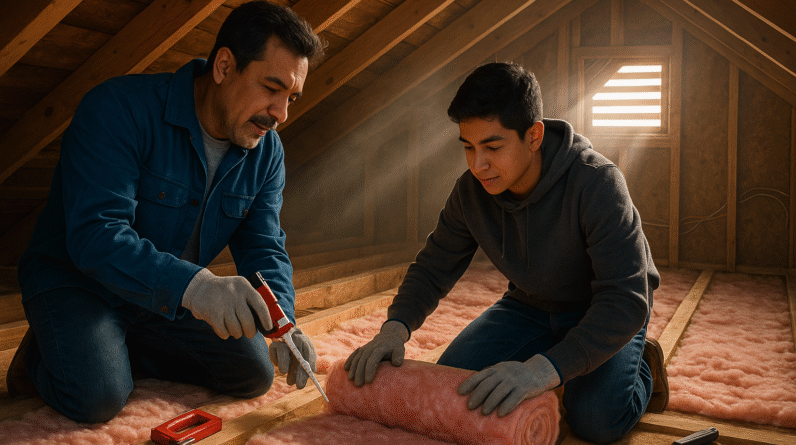
- Add attic insulation if it sits below R-30. Rolling out basic insulation is a simple weekend project.
Estimated Savings:
Around 10–15% off heating and cooling. For less than $100 in supplies, you can tighten the whole house up pretty well.
2. Master Your Thermostat
Managing your thermostat is one of the easiest ways to cut usage. You don’t need anything fancy to make it work in your favor.
Here’s the Rule of Thumb:
- Set it near 68°F in winter and 78°F in summer.
- Adjust it down or up when you’re away or asleep.
- Use ceiling fans in summer so higher temps still feel comfortable.
- Wear an extra layer in winter. Dropping the temp a degree or two adds up over time.
Budget Tip:
No need for an expensive smart thermostat. A simple programmable model will do the job.
3. Optimize Your Water Heater
Your water heater runs quietly in the background, but it eats a lot of power. Small tweaks make a noticeable difference.
Cheap Water Heater Hacks:
- Set the tank to 120°F.
- Add a water heater blanket if the tank feels warm on the outside.
- Slide foam sleeves on the first few feet of hot water pipes.
- Fix dripping faucets or leaky valves right away. Even slow drips waste gallons.
Bonus Tip:
Shorter showers and cold-water laundry go a long way.
Estimated Savings:
Most households can expect $50–$100 saved per year, sometimes more with a full family load.
4. Slash Vampire Power
Electronics draw power even when they look “off.” This slow drain adds up over the year.
How to Kill It:
- Use smart power strips to shut off idle devices.
- Unplug chargers and small appliances when not in use.
- Shut computers and monitors fully down at night.
- Choose eco settings when your devices offer them.
Look for the worst offenders:
- Cable boxes
- DVRs
- Desktop computers
- Microwaves with digital clocks
- Gaming consoles
Estimated Savings:
Up to $100 a year, depending on how many devices stay plugged in.
5. Swap Your Bulbs, Then Your Fixtures
Old incandescent and halogen bulbs burn a lot of energy. Switching them out is one of the fastest upgrades you can make.
Make the Switch:
- Move everything over to LEDs. They use far less electricity and last much longer.
- Start with high-use rooms like kitchens, bathrooms, porches, and living rooms.
- Update outdoor floodlights and security lights with LED versions made for tough weather.
Want to go a step further?
- Replace worn-out fixtures with Energy Star models.
- Add motion sensors to outdoor areas to keep lights off when not needed.
Estimated Savings:
Most homes see $50–$150 in savings each year from lighting upgrades alone.
6. Run Appliances Smarter
You don’t need new machines to cut costs. Just use the ones you have with a little more intention.
Dryer Hacks:
- Clean the lint trap every time.
- Run loads back-to-back so you use leftover heat.
- Line dry clothes when possible, indoors or outside.
- Stick to full loads, not cramped or half-empty ones.
Laundry & Dishwasher Tips:
- Only wash full loads.
- Use cold water cycles.
- Air-dry dishes or set the dishwasher to its energy saver mode.
- Run machines at night if your utility offers lower off-peak rates.
Kitchen Savings:
- Give your fridge and freezer room to breathe by not overpacking.
- Keep food covered so the fridge doesn’t work harder.
- Use smaller appliances like a microwave for quick meals instead of heating the full oven.
7. Use Fans, Not Power-Hungry Units
Fans use very little energy and can take the pressure off your AC or heater.
Summer Tactics:
- Use box fans in windows at night to pull in cooler air.
- Set ceiling fans to spin counterclockwise.
- Keep blinds closed during the hottest hours.
- Add reflective window film or insulated curtains for sunny rooms.
Winter Tips:
- Reverse ceiling fans to clockwise to push warm air down.
- Use small space heaters only in occupied rooms.
- Leave interior doors open so warm air can move through the home.
Fans cost pennies to run compared to air conditioning.
8. Upgrade Your Habits, Not Just Your Hardware
Some of the best savings come from simple routines. No tools needed, just consistency.
Easy Habits That Save:
- Turn off lights when you leave a room.
- Drop the thermostat a bit when cooking or doing chores.
- Heat or cool only the rooms you’re using.
- Keep pot lids on while cooking to cut time.
- Avoid opening the oven door mid-bake.
- Close the fridge quickly so cold air stays where it belongs.
Small adjustments add up when you use them every day.
9. Learn to Read Your Electric Meter or Smart Usage Reports
If your provider gives detailed usage data, use it. It helps you spot patterns and fix waste before the bill arrives.
What You Can Learn:
- High-usage times you can shift around
- Which appliances draw the most power
- Spikes or unusual days where something ran too long
If you don’t have a smart meter, check your bill or read the meter yourself once a week.
10. Bundle Up the Whole House
Your home works as a system. A few cheap comfort upgrades can keep heat where you want it.
Whole-Home Budget Fixes:
- Hang thermal curtains in drafty rooms.
- Lay down area rugs on cold floors.
- Use draft blockers along doors.
- Change fan direction with the seasons.
- Switch to LED holiday lights.
- Add solar motion lights for outdoor use.
Final Thoughts: Budget First, Then Build
You don’t need big upgrades to make real progress. The cheapest way to cut your electric bill by 25% is simple: tighten up your home, adjust a few habits, and make steady improvements. These changes fit into almost any budget and start paying off right away.
Here’s the deal. Start with one or two areas this week, then keep building as you go. You’ll see the difference on your next bill, and the savings keep growing from there.


